Does Dermaplaning Make Hair Grow Back Thicker?
- butterflybeautybri
- Apr 2
- 2 min read

Updated: Apr 15

If you've been tempted to try dermaplaning but held back because of the hair question, you're not alone. It's the most common thing I get asked — and I completely understand why. The idea of a blade on your face is already a leap of faith, without worrying you'll end up hairier than you started.
So let's settle this once and for all.
The short answer: no, dermaplaning does not make your hair grow back thicker.
It genuinely cannot. And I say that not as a beauty therapist trying to sell you a treatment — I say it as someone who has had it done herself, and who understands the biology behind why this myth simply isn't true.
Why the myth exists
When you shave or dermaplane, the hair is cut at the surface of the skin. That creates a blunt edge at the tip of the hair — rather than the soft, tapered point that a hair grows to naturally. When it grows back, that blunt edge can feel slightly rougher or more noticeable to the touch at first.
That's it. That's the whole reason the myth exists. A sensation of roughness, misread as thickness.
The hair follicle itself — the structure beneath the skin that determines thickness, colour, and growth rate — is completely untouched by dermaplaning. You would need to physically alter the follicle to change the hair. A blade on the surface of your skin simply doesn't do that.
What dermaplaning actually does
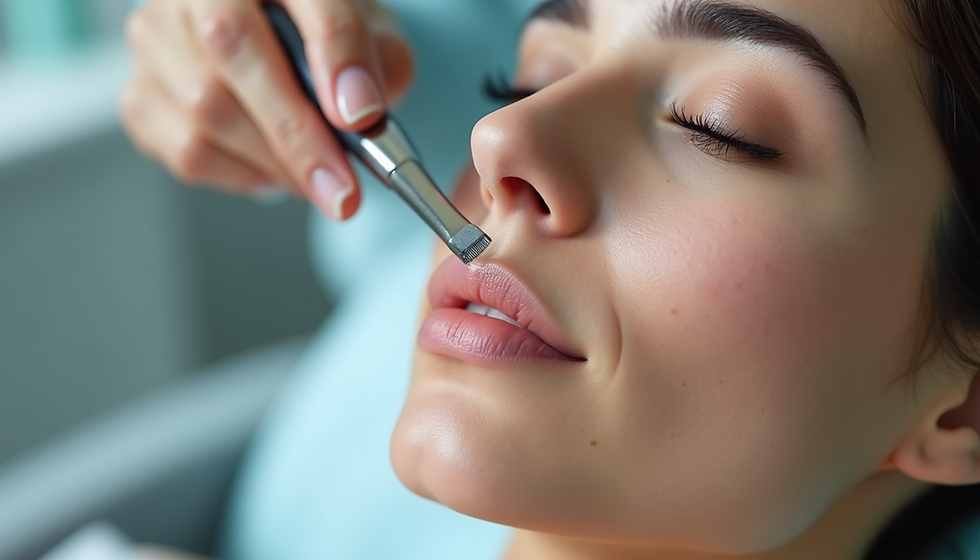
Dermaplaning uses a surgical-grade blade to gently remove the top layer of dead skin cells and the fine vellus hair — often called 'peach fuzz' — from your face. The results are:
• Immediately smoother, brighter skin
• Better absorption of your skincare products
• A flawless base for makeup, or a natural glow without it
• A reduction in the appearance of dullness and uneven texture
It's one of the most satisfying treatments I offer, because clients can see and feel the difference the moment it's done.
Who is dermaplaning good for?
Most skin types benefit from dermaplaning, including dry, dehydrated, and dull skin. It's particularly good if you want to make the most of your skincare routine, because removing that layer of dead skin means your serums and moisturisers can actually get to work.
It's not recommended for active acne, very sensitive skin conditions like rosacea, or if you're currently using certain prescription skin treatments. That's why I always do a full skin consultation before recommending any treatment — because what works beautifully for one person's skin isn't always right for another.
The regrowth: what to expect
Your vellus hair will grow back in roughly the same timeframe as before — usually within a few weeks. It will feel slightly blunt initially, but within days it softens. Most clients don't notice it at all.
And those clients who were convinced their hair would come back thicker? They come back for another session. Every time.
Ready to try it? Book a Skin School 20-minute skin consultation at Butterfly Beauty, Bridgend, and I'll tell you honestly whether dermaplaning is right for your skin. No pressure, no obligation — just a proper conversation.


Comments